August 13, 2026
Before the Grapevine: A Pre-Trip Check for SCV Drivers
If your summer plans point north out of Santa Clarita, the first real test comes fast. Head up Interstate 5 through Castaic and the road tilts uphill toward the Grapevine, the long grade that tops out at Tejon Pass around 4,144 feet. From the valley floor here, that is a climb of close to 3,000 feet, much of it on a grade near six percent, and it lands at exactly the moment a summer afternoon is pushing past 100 degrees. A car that feels perfectly happy running errands on Soledad Canyon Road can find its limits in the first ten miles of that climb.
The Grapevine does not create new problems so much as expose the ones already there. A cooling system that is a little tired, brakes with not much pad left, a battery limping through its last summer, an oil change you keep meaning to book. None of it matters at 35 mph around town. All of it matters when you are loaded down, running the AC, and asking the engine to pull hard for twenty minutes straight. And the miles beyond the pass are long and open, whether you drop down toward the San Joaquin Valley or head up Highway 14 into the high desert. A short pre-trip check before you leave town is a lot cheaper than a tow truck on the shoulder past Castaic. Here is what actually matters for this drive.
The Climb Is a Cooling System Test
More cars get stranded on the Grapevine by heat than by anything else, and the reason is simple. Climbing 3,000 feet with a full load and the air conditioning on high is about the hardest job you will ever hand your cooling system, and the hot air coming off the grade gives the radiator very little to work with. If the coolant is low, old, or mixed wrong, if a hose has gone soft, or if the radiator cap no longer holds pressure, this is where it shows up, as a temperature needle climbing toward the red.
Before a big trip, have the coolant level and condition checked, along with the hoses, the water pump, and the cap. This is bread-and-butter routine maintenance, and it is the best insurance you can buy against a breakdown on the grade. If your gauge already creeps up sitting in traffic on the 14 or crawling through the Newhall Pass interchange, do not take that car up the hill until it has been looked at.
Coming Down the Grade: Don't Trust Tired Brakes
What goes up has to come down, and the descent is its own hazard. The far side of the Grapevine drops steeply enough that Caltrans built runaway truck ramps into it, and every summer someone rides the brakes the whole way down and cooks them into fade, which means a soft pedal and very little stopping power right when they need it most. The same trap waits on your everyday drive down the Newhall Pass into the San Fernando Valley.
The fix is half technique and half condition. Shift into a lower gear and let the engine hold you back instead of leaning on the pedal. Then make sure the brakes themselves are up to it, because worn pads, thin rotors, and old fluid that has soaked up moisture all fade faster under heat. If the pedal feels soft, or you hear squealing or grinding, get the brakes inspected before you point the car uphill, not after.
Signs Your Car Isn't Ready for the Grade
If any of these sound familiar, sort them out before you load up for the drive north. On their own they are easy to ignore around town. Under the heat and load of the climb, they are how road trips end early on the shoulder.
- The temperature gauge creeps up in stop-and-go traffic or on a hill
- A sweet smell, or damp coolant spots under the car after it sits parked
- A brake pedal that feels soft or low, or squealing and grinding when you stop
- A shimmy or vibration through the steering wheel at freeway speed
- Cracked, glazed, or squealing belts under the hood
- Any dashboard warning light, especially check engine, battery, or temperature
- An oil change that is overdue by time or by miles
Tires, Fluids, and One Last Look Before You Go
Heat is hard on more than the engine. Underinflated or worn tires run hotter on sun-baked asphalt, and a long freeway pull in triple-digit weather is a classic setup for a blowout, so check your pressures when the tires are cold, look at the tread, and do not forget the spare. Rough canyon roads like Bouquet Canyon knock your alignment out over time too, and that shimmy at speed is worth chasing down before a long haul. Fresh oil at the right level matters more under load, an automatic worked hard up the grade leans on its transmission fluid, and heat, not cold, is what kills most batteries.
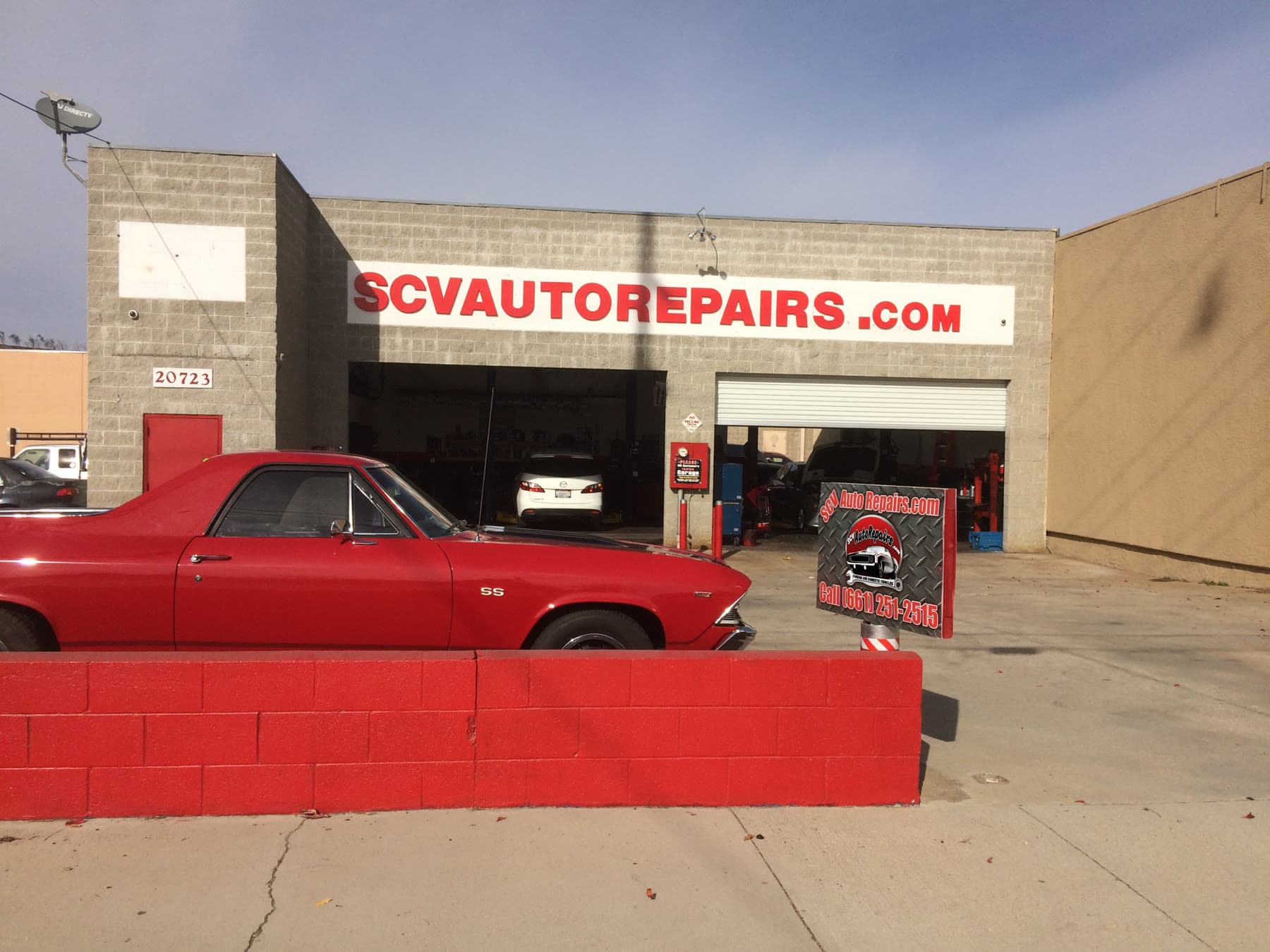
The good news is that all of it folds into a single routine maintenance visit, and our ASE-certified technicians can handle it on any make or model, including hybrids and EVs, with OEM-quality parts and a 3-year/36,000-mile nationwide warranty on the work. Before you take on the Grapevine, give the team at SCV Auto Repairs a call at 661-251-2515 or stop by 20723 Soledad Canyon Road in Canyon Country. Better to catch it in the bay than on the shoulder past Castaic.
Frequently Asked Questions
How much does my car actually climb going up the Grapevine from Santa Clarita?
Santa Clarita sits around 1,200 feet, and Tejon Pass at the top of the Grapevine is about 4,144 feet, so from Castaic you gain close to 3,000 feet, a lot of it on a grade near six percent. That long, sustained pull in summer heat is what separates a healthy car from one that overheats.
My temperature gauge creeps up on the grade but the car is fine around town. Should I worry?
Yes. Around town your cooling system barely has to try. A long climb with the AC on is the real test, and a gauge that drifts toward hot is an early warning that the coolant, radiator, or water pump needs attention before it strands you. Get it checked before the trip, not on the shoulder past Castaic.
Do I really need my brakes looked at before a mountain drive if they feel fine?
It is worth it. Brakes that feel fine on flat streets can fade on a long descent like the north side of the Grapevine or the Newhall Pass, especially with worn pads or old fluid. A quick inspection tells you whether they can take the heat, and shifting into a lower gear on the way down takes a lot of load off them.
Do you service hybrids and electric vehicles for a trip like this?
Yes, we work on all makes and models, including hybrids and EVs. Those still need their tires, brakes, and fluids checked, and a hot climb followed by a long open stretch on I-5 or Highway 14 is demanding on any drivetrain, so a pre-trip look-over is just as smart.
Related service
Need help now? See our Routine Maintenance in Santa Clarita.